


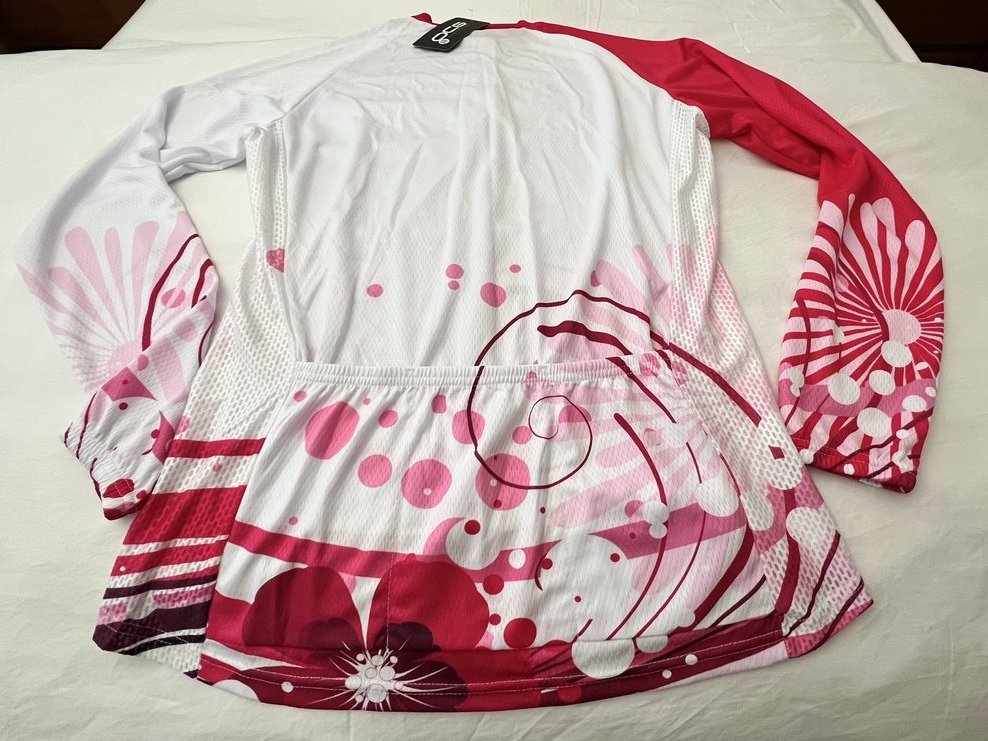
No. Keep cycling jerseys and knicks out of the dryer and peg them on the line, in the shade if you can. Polyester barely shrinks, but tumble dryer heat wears out the elastic fibres, silicone grippers and chamois gel that hold your kit in place. On a warm Australian day, you do not need a dryer anyway.
In short
- Keep jerseys and knicks out of the dryer. A washing line in the shade is better.
- Polyester barely shrinks. Heat does its damage to elastic and grippers.
- Strong sun can fade colours, so bring kit in once it is dry.
- A tight jersey is more often a sizing question than a shrinking one.
Can cycling jerseys go in the dryer?
Our answer is no, every time, and in an Australian summer it is an easy habit to keep. A dryer can shrink fabric and take the softness out of it, and a jersey carries parts a T-shirt does not have. The polyester body handles heat reasonably well. The stretch fibres in the mesh panels and the silicone gripper at the waist have a harder time, and those are the parts stopping a jersey riding up your back.
Spandex is the weak point, and Sew Guide's care advice warns that tumble dryer heat damages both the structure and the stretch of a spandex garment. The side panels on our printed jerseys are 88% polyester and 12% elastane (the same fibre), so the bit that stretches is the bit that suffers. One load will not show it. You find out later, on a climb, when the hem starts to creep.
Our beginner cycling kit and washing guide has the full wash routine. Here we pick up where the machine stops.
Is line drying in the sun safe for cycling kit?

A line is the right place, but full sun for hours is not. Ultraviolet light fades coloured fabric over time, and summer is when that risk is highest, according to In The Wash's guide. Reds and blacks are the ones it singles out for the shade. A few hours will not do any visible harm, so nobody needs to panic about one wash.
Hang kit on the shady side of the Hills hoist or under the verandah, and turn it inside out if it has to sit in the sun. With a warm breeze, shade costs you little drying time, and the bigger mistake is forgetting it out there until the next evening. Bring kit in once it is dry.
Keep it off hot metal as well. As general advice, a dark jersey on a sun-baked fence or car roof gets far hotter than one on a line, and that heat is the same problem you were avoiding by skipping the dryer.
Do cycling jerseys shrink in the dryer or the wash?
Very little. Most fabric shrinkage comes from tension in the yarn relaxing after manufacturing, and natural fibres do far more of that than synthetics. Polyester shows minimal shrinkage compared with other fibres, which is why a cotton T-shirt can come out of a hot dryer a size smaller while a polyester jersey usually does not.
Our product pages back that up. The Men's OCG Plain Color Block Short Sleeve Cycling Jersey is 100% polyester and listed as pre-shrunk, with care at 20-30°C in the machine. Polyester is still a thermoplastic and can change shape when it gets hot, so a hot dryer is not free of risk. Repeated cycles are more likely to leave you with a jersey that fits worse because its stretch has gone than one that has become smaller.
Can bib shorts and knicks go in the dryer?

No. They have more to lose than a jersey, because they are stretch from top to bottom. The Men's Plain Colour Pro-Band Gel Padded Cycling Bib is 80% polyester and 20% Lycra, with a silicone gel chamois and 45 mm silicone leg grippers. High heat can make a blend with more spandex shrink unevenly, and elastic fibres can distort in it.
We also keep silicone and gel away from dryer heat as general care advice, since grippers and pads only work while they hold their shape. For the signs that a pair has reached the end, see our guide on how long bib shorts last. Our care line for bibs and knicks is machine wash at 30°C, do not dry clean or iron.
How do you dry bib shorts and knicks?
These steps are general advice, and they suit any padded knicks.
- Press the water out by hand. Wringing twists the pad and strains the fabric around it.
- Roll the knicks in a dry towel and press. The towel pulls most of the water out of the pad, which is always the slowest part to dry.
- Peg them by the legs on a shady part of the line, or fold them over a rack bar, with the pad open to the air. A wet pad is heavy, so we would not leave that weight hanging from the straps.
- Check the pad with your hand before you put them back on. A damp chamois in the heat is an invitation for bacteria and odour.
Summer makes it a daily job, with sweaty rides most mornings. A second pair helps more than any trick here, and our guess is that a lot of dryer temptation comes from owning one pair and riding early.
| What you are drying | Dryer | Best way to dry | Avoid |
|---|---|---|---|
| Short or long sleeve jersey | No | Shady line or hanger, unzipped | Hours in full sun, iron |
| Bib shorts and knicks | No | Towel roll, then line with the pad open | Wringing the pad |
| Arm warmers and bib tights | No | Line or rack | Hot metal rails and fences |
| Socks and caps | Check the label | Line, in the shade for bright colours | High heat |
How do you dry kit in a summer storm or humid week?
Storm season can leave a line useless for days, and in the humid north kit dries slowly even on a good one. Bring everything under cover and give it moving air. A fan on a rack in a breezy room or verandah does most of the work, and a towel roll first saves a lot of time.
If you ride early and need the same jersey tomorrow, wash it as soon as you get home and hang it right away. It will have the rest of the day to dry, which beats starting a load at night. Packing for a summer trip with no line at all? Our guide on packing cycling kit for a summer trip has you covered.
Why does your jersey feel tighter after washing?
Most of the time it has not shrunk. At 30°C a polyester jersey has little reason to change size, and our printed jersey and shorts pages list anti-shrink among their features. A snug fit from the very first ride points to the size.
Every jersey we sell has a club fit cut. Our sizes run small, so check the size chart on this page before you choose, using your chest, waist and hip measurements, and size up if you are between sizes. Non-customised items come with 60-day store-credit returns, as our returns policy explains.
Kit for the washing line

Online Cycling Gear
Men's Pro-Band Classic Plain Color Gel Padded Cycling Shorts
$69.99$74.95
Shop Now


Frequently asked questions
Can you tumble dry cycling kit?
We advise against it for jerseys, knicks, bibs and bib tights. A shady line or a rack with a fan does the job.
Do cycling jerseys shrink in the wash?
Hardly. Synthetic fabrics are more stable than natural fibres, and a wash at 30°C is gentle on polyester. Follow the steps in our washing guide.
Will the sun fade my cycling jersey on the line?
A few hours will not do visible harm. Regular long stretches in strong summer sun can fade colours over time, so use the shade and bring kit in once it is dry.
I already put my jersey in the dryer. Is it ruined?
Probably not, after one load. The wear builds up over repeated cycles, so check that the gripper and side panels still spring back, and keep it on the line from now on.
How long do knicks take to dry on the line?
It depends on the heat, the humidity and the breeze. The outer fabric dries first and the pad comes last, so test the pad with your hand before you ride.