


The lanterne rouge, French for "red lantern", is the rider who finishes the Tour de France in last place overall, with more total time than anyone else who reaches the end. The name comes from the red lamp on the last carriage of a train. There is no jersey for it, yet fans hold the title in real affection.
In short
- Lanterne rouge is French for "red lantern", the lamp that hung on the last carriage of a train.
- It goes to the rider who finishes the Tour de France last overall, with the most total time.
- There is no jersey and no official classification prize for it.
- Two Australians have held it: Richard Lamb in 1931 and Caleb Ewan in 2022.
What does lanterne rouge mean in the Tour de France?
The Tour de France ranks every rider by total time across 21 stages and about 3,500 kilometres. Lowest time wears yellow. The rider at the very bottom of that same list, with the most time on the clock, is the lanterne rouge.
Only finishers count. Abandon the race and you drop out of the standings altogether, so the lanterne rouge is the slowest of the riders who made it to the final stage. The gap can be enormous. When Australian sprinter Caleb Ewan took the red lantern in 2022, he finished more than 5 hours behind the winner, Jonas Vingegaard.

Ewan is a good example of who usually ends up there. He has five Tour de France stage wins, all from 2019 and 2020, so he is anything but slow on a flat finish. Wikipedia's history of the title notes that red lanterns often go to sprinters and riders built for shorter races, who lack the climbing legs for three weeks of mountains, or to riders who keep going while injured.
Why is it called the red lantern?
Blame the railways. A red lantern hung on the back of the last carriage of a passenger train, or on the brake van of a goods train, so signal staff could see that the whole train had passed and nothing had come loose. Whatever carries the red lamp is the last thing in line.
Cyclists borrowed the image as it was. According to the Tour de France article on Wikipedia, some past holders played along and rode with a small red light under the saddle.

Does the lanterne rouge get a jersey?
No. The Tour de France awards four leader's jerseys: yellow for the overall leader, green for the points classification, white with red polka dots for the best climber, and white for the best young rider. Last place has no jersey and no official classification prize. Our guide to what cycling jersey colours mean explains the four official ones.
That missing jersey is half the charm. The lanterne rouge is a title kept alive by fans and commentators, not one the organisers hand out.
More Tour de France designs

Online Cycling Gear
Men's Lanterne Rouge Red Lantern Short Sleeve Cycling Jersey
$69.99$79.99
Shop Now
Online Cycling Gear
Men's Tour de France Leaders KOM Sprinters Short Sleeve Cycling Jersey
$69.99$79.99
Shop Now
Online Cycling Gear
Women's Tour de France Leaders KOM Sprinters Short Sleeve Cycling Jersey
$69.99$79.99
Shop Now
Online Cycling Gear
Kid's Tour de France Leaders KOM Sprinters Short Sleeve Cycling Jersey
$69.99$79.99
Shop NowWho are the most famous lanterne rouge riders?
Australia has a place in the story from early on. In 1931 Richard Lamb became the first rider from outside France to take the red lantern, after French riders had held it at every edition since the first Tour in 1903. Ewan made it two Australians in 2022.
| Rider | Year(s) | Why people remember it |
|---|---|---|
| Richard Lamb (Australia) | 1931 | First red lantern from outside France |
| Wim Vansevenant (Belgium) | 2006, 2007, 2008 | The record: last overall three years in a row |
| Gerhard Schönbacher (Austria) | 1979, 1980 | Last twice, the second time despite a rule written to stop him |
| Lawson Craddock | 2018 | First rider ever to be last after every single stage |
| Sam Bennett (Ireland) | 2016 | Broke a finger on stage 1, finished last, won the green jersey in 2020 |
| Caleb Ewan (Australia) | 2022 | A five-time stage winner who finished over 5 hours down |
Craddock's Tour shows why the title earns respect. He crashed on the opening stage in 2018, cracked his shoulder blade and kept riding, and he became the first rider in Tour history to sit last after every stage before reaching Paris.
Can a rider try to finish last on purpose?

It has happened. For a long time a famous last place could pay better than an anonymous spot near the back, because the lanterne rouge got booked for the post-Tour criteriums, the exhibition races where riders earned much of their income. As Wikipedia puts it, the last rider is often remembered while those a few places ahead are forgotten.
The best-known contest came in 1979. Gerhard Schönbacher and Philippe Tesnière were the last two riders overall, less than a minute apart, going into the final time trial. Tesnière rode slowly to avoid last place. Bernard Hinault won the stage in 1:08:53, Schönbacher took 1:21:52, and Tesnière took 1:23:32. That left Tesnière more than 20% slower than the winner, outside the time limit, and he was put out of the race. Every Tour stage has a limit of this kind: the winner's time plus a set percentage.
Organisers have tried to stop the game more than once. In 1939 and 1948 they excluded the last rider overall every day. For 1980 they brought in a rule that removed the last rider after each stage from stage 14 to stage 20. Schönbacher finished last anyway.
Why do riders and fans love the lanterne rouge?

Finishing the Tour at all is hard. Plenty of riders crash out, fall sick or miss a time limit, and the lanterne rouge is the one who kept rolling up to the start line for three weeks. Fans read that as grit, not failure.
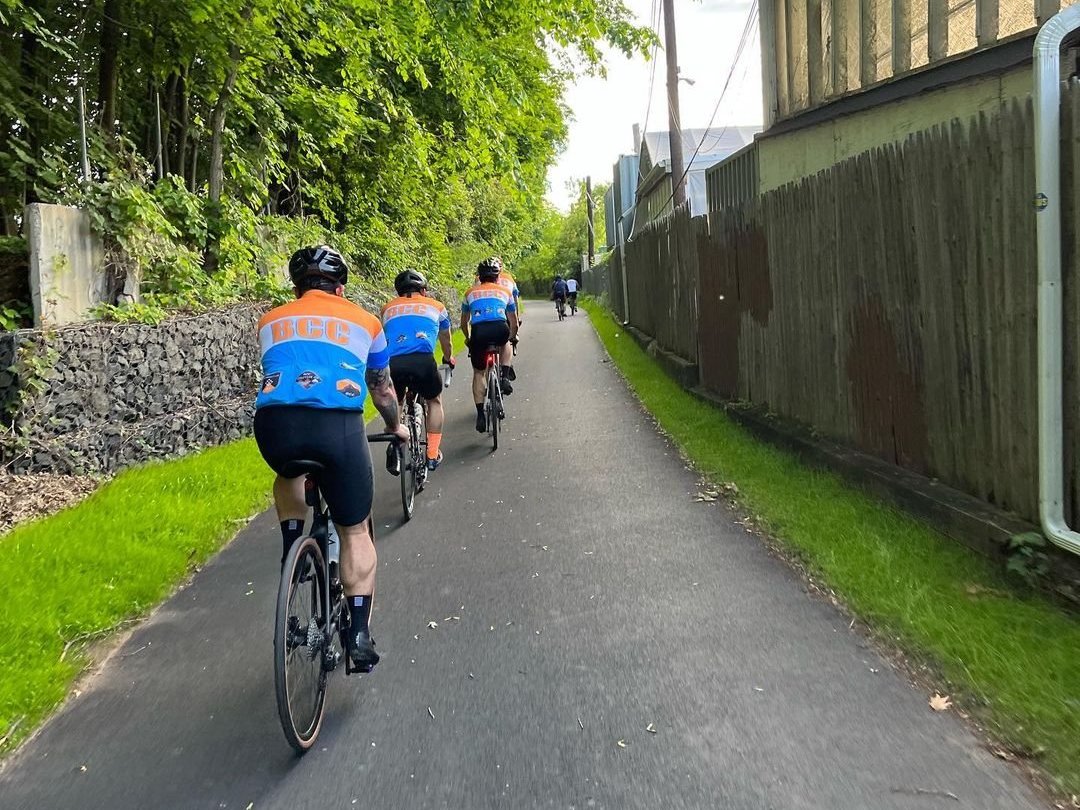
Most of us have also been that rider. Anyone who rides with a club knows what it is like to be last up the climb with the bunch waiting at the top, and the red lantern turns that moment into a joke you can share at the café.
Writer Max Leonard built a whole book around the idea. Lanterne Rouge: The Last Man in the Tour de France, published by Yellow Jersey, a Penguin imprint, tells the stories of riders who ended up at the bottom, including former stage winners and a breakaway rider sent off course by a detour, and asks what last place says about success in sport.
Can you wear a lanterne rouge jersey on group rides?
Spring is a good time to try it, with longer days and plenty of social rides on the calendar. Our Lanterne Rouge Red Lantern jersey is a short sleeve jersey for anyone who has finished at the back and still finished.

The product page lists 140 GSM moisture-wicking polyester, mesh side panels, three back pockets and a full-length hidden zip, in sizes XXS-7XL. Our sizes run small, so check the size chart on this page before you choose.
For the jerseys the Tour does hand out, the Tour de France Collection has yellow, green, polka dot and white designs. More jokes for the back of the bunch live in our Humor Collection.
The jerseys the Tour does award

Online Cycling Gear
Men's Tour de France Yellow Leaders Maillot Jaune Short Sleeve Cycling Jersey
$69.99$79.99
Shop Now
Online Cycling Gear
Men's Tour de France Green Sprinters Maillot Vert Short Sleeve Cycling Jersey
$69.99$79.99
Shop Now
Online Cycling Gear
Men's Tour de France King of the Mountains Series 1 Short Sleeve Cycling Jersey
$69.99$79.99
Shop Now
Online Cycling Gear
Men's Tour de France Young Rider Maillot Blanc Short Sleeve Cycling Jersey
$69.99$79.99
Shop NowFrequently asked questions
Has an Australian ever been the lanterne rouge?
Yes, twice. Richard Lamb in 1931, the first red lantern from outside France, and Caleb Ewan in 2022.
Who has been the lanterne rouge the most times?
Wim Vansevenant of Belgium, three times in a row, in 2006, 2007 and 2008.
Is the lanterne rouge an official Tour de France award?
No. There is no jersey and no official classification prize. It is a nickname for the last rider overall in the final standings.
Does a rider who quits the Tour become the lanterne rouge?
No. Riders who abandon leave the standings. The lanterne rouge has to finish the final stage.
What does lanterne rouge mean in English?
Red lantern. It refers to the red lamp that hung on the back of the last carriage of a train.